Activity
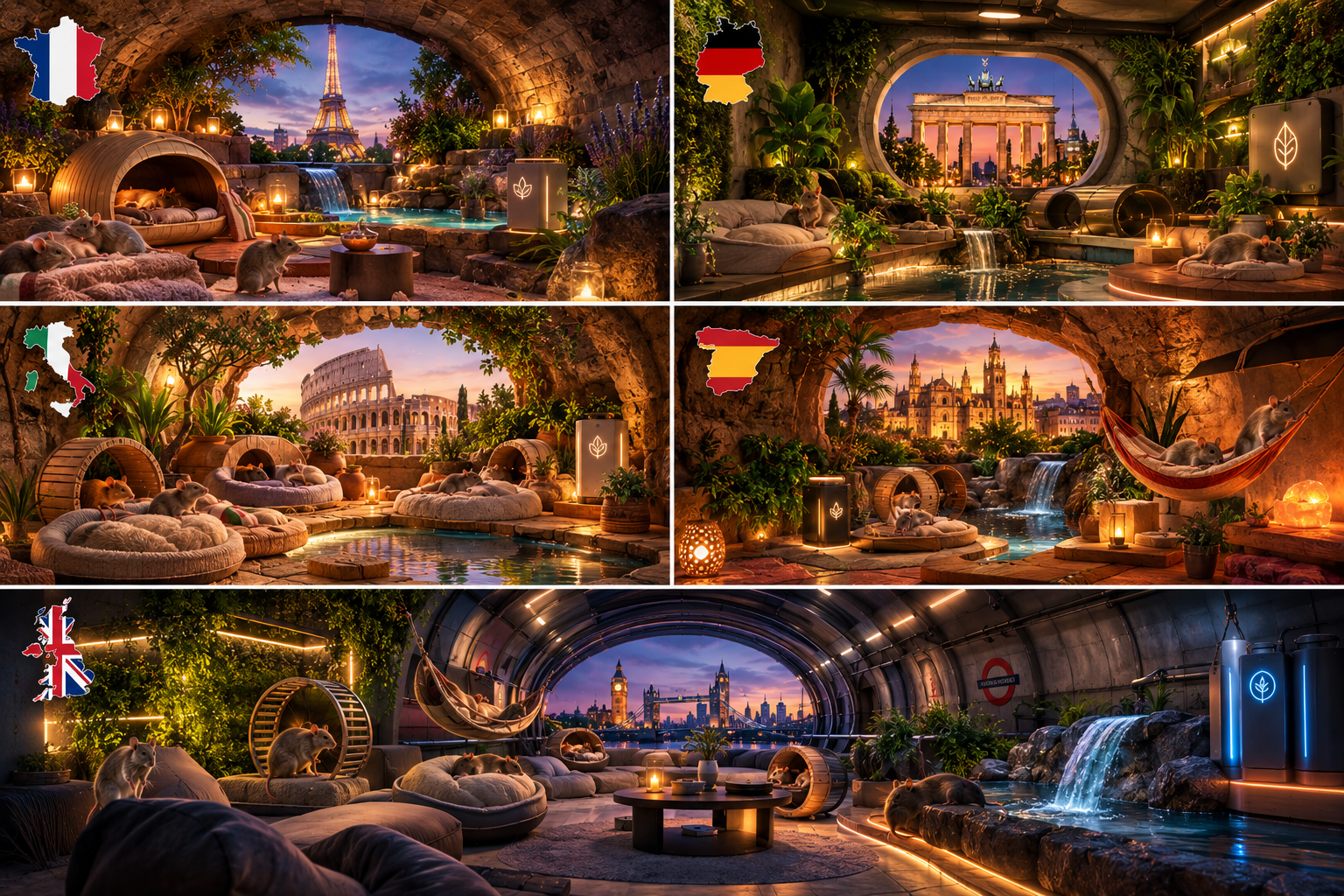
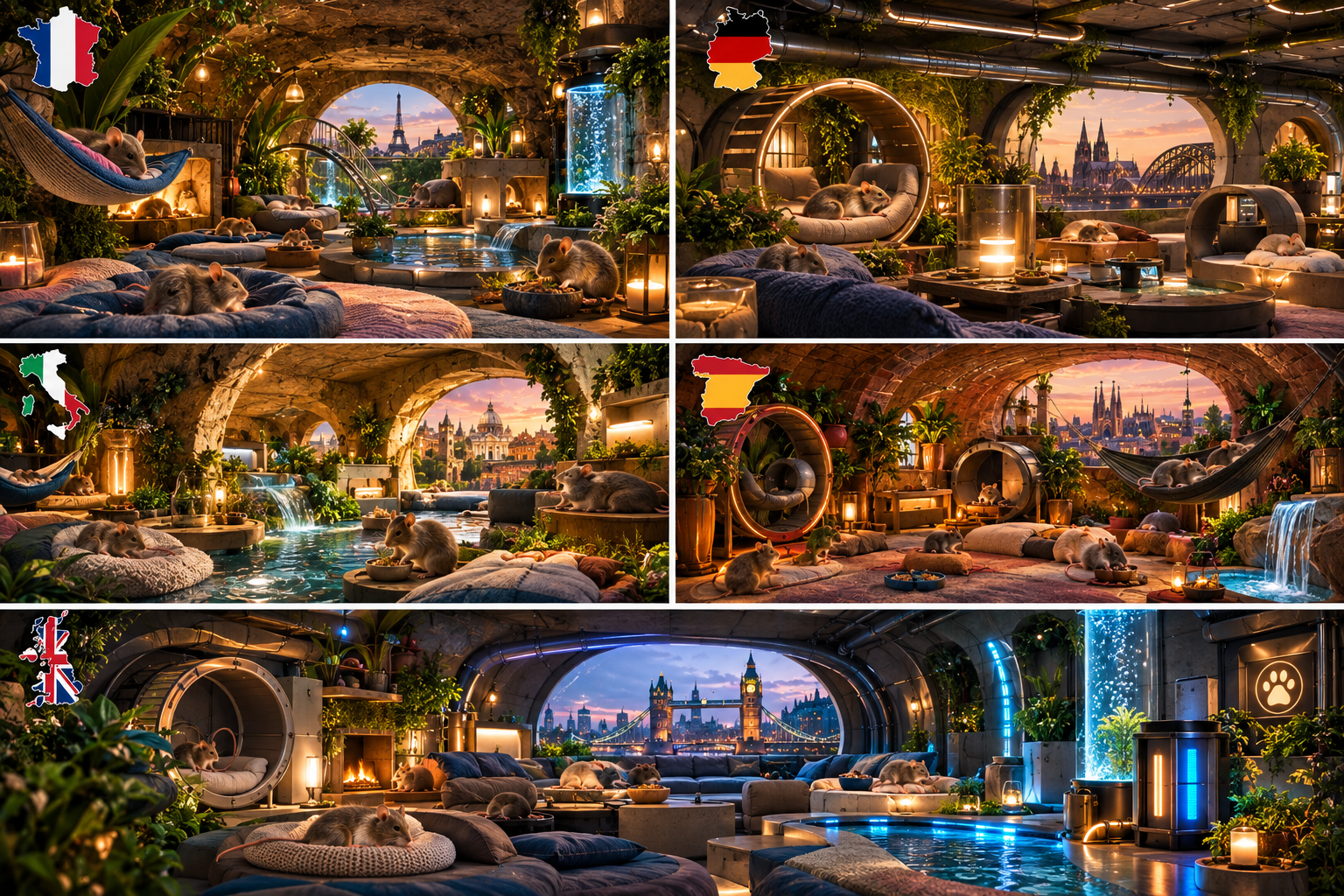
The rodent moves freely through an enriched environment.
Small paws. Big impact.
BLAMPS turns rodents’ natural activity into clean, measurable and locally generated micro-electricity.
The BLAMPS principle
A simple, observable and modular conversion chain designed as a responsible micro-energy demonstration.
The rodent moves freely through an enriched environment.
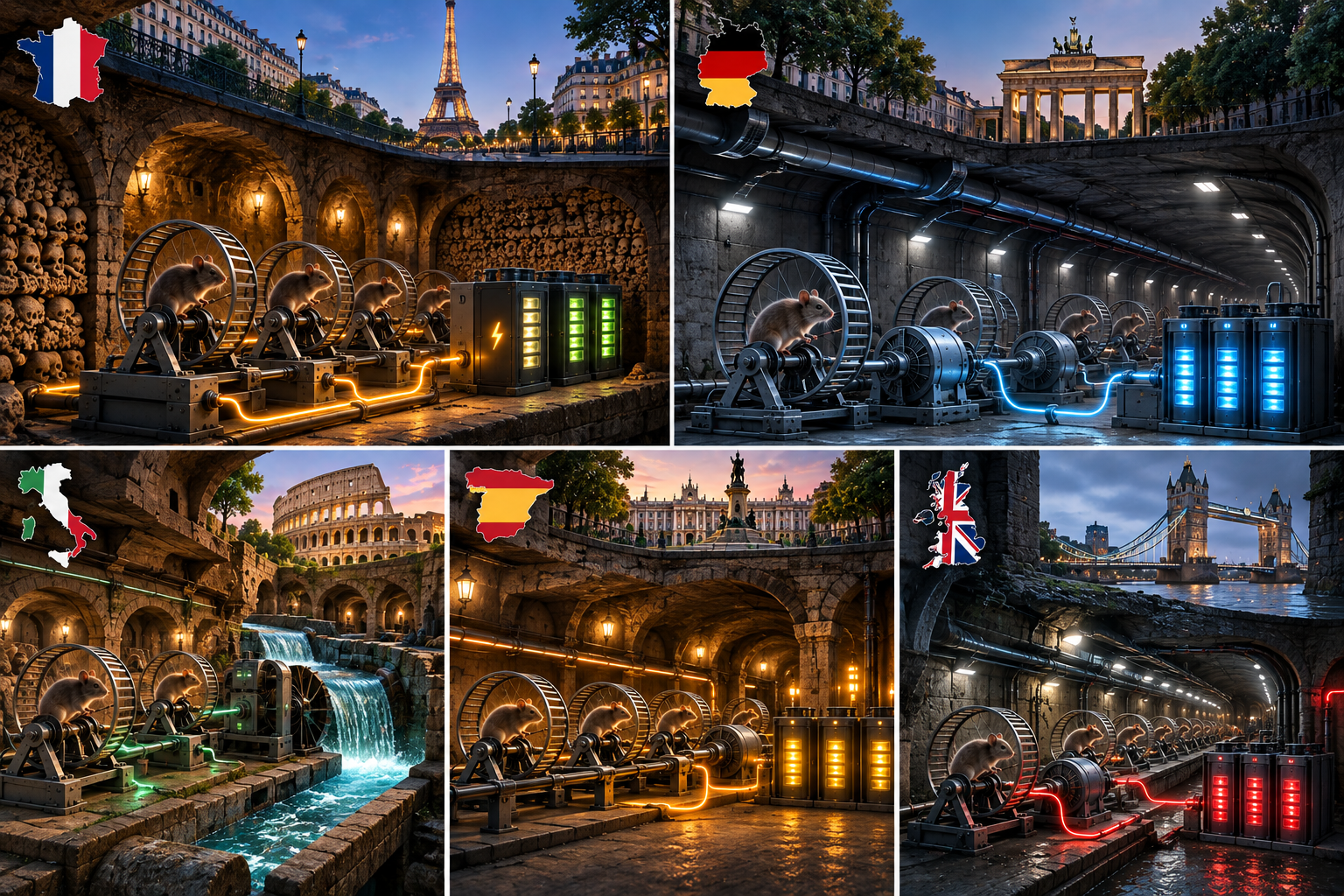
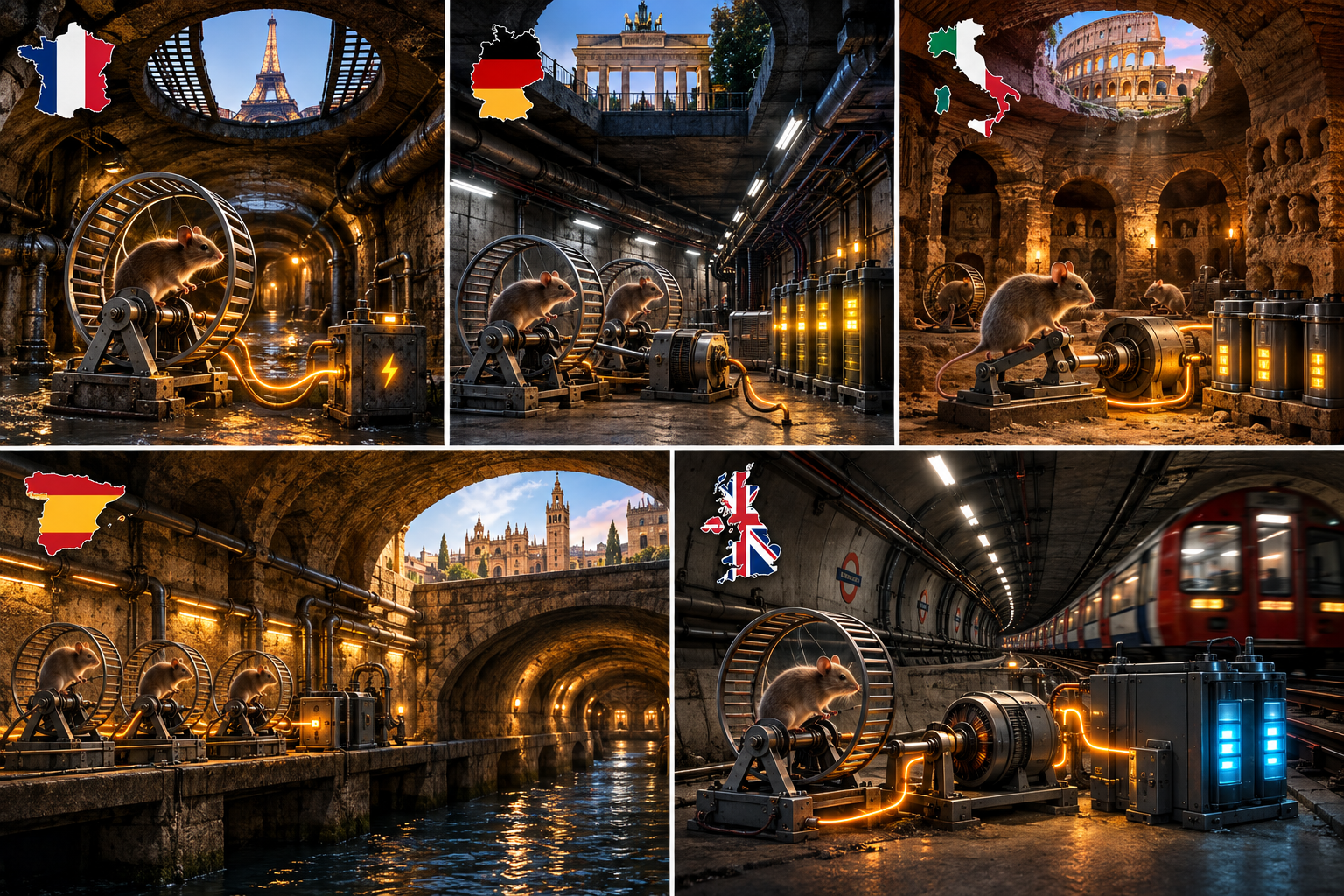
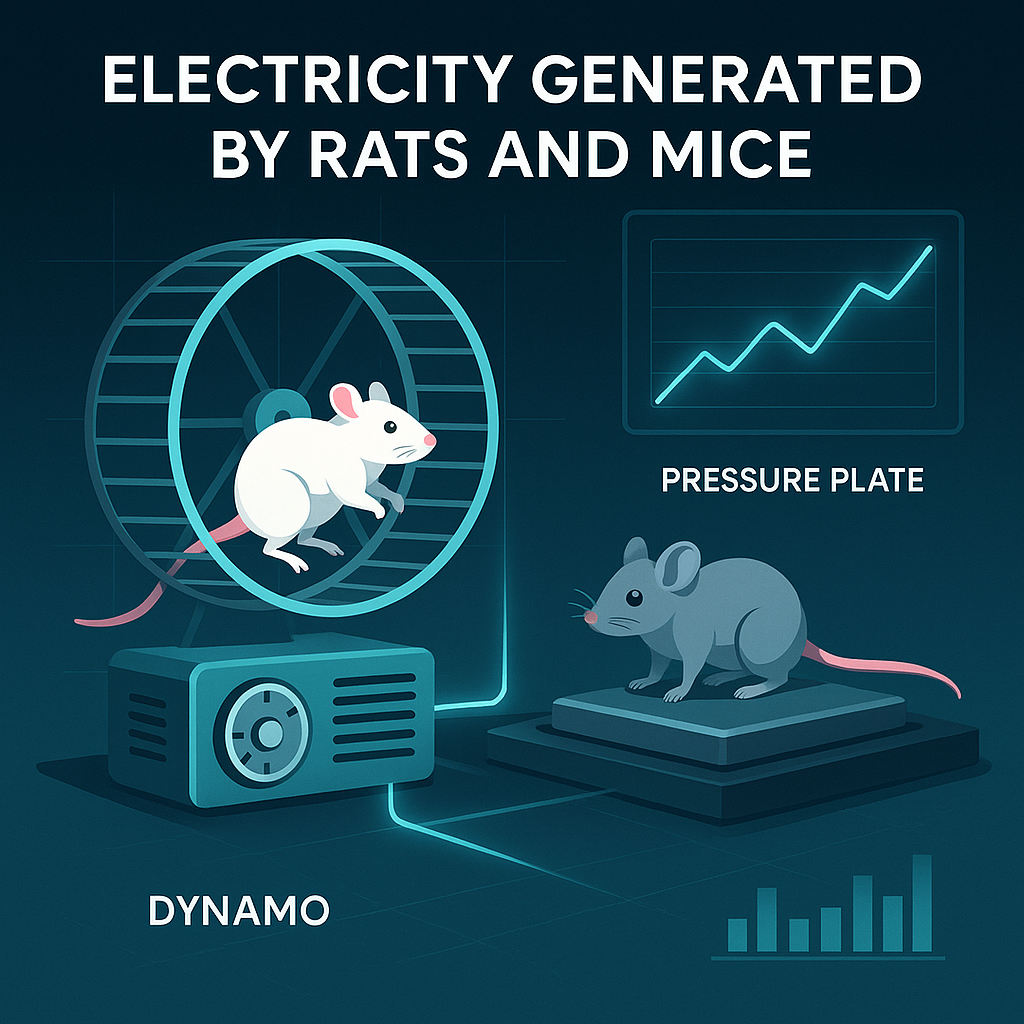
The wheel and pressure plates capture movement through a low-friction dynamo.
The energy is regulated, measured and stored in low-voltage modules.
 Concept prototype
A hybrid system
BLAMPS combines several ultra-low-power sources and makes their output visible through a central interface.
A compact rotor turns natural rotation into direct current.
Piezoelectric sensors capture movement through the habitat.
The controller balances generation, storage and demonstration loads.
The bio-collector cycle
People place compatible organic waste into bio-collectors. After sorting and preparation, the network distributes food at different times to naturally encourage movement between habitats.
Suitable organic leftovers are placed in the collector.
The prototype isolates compatible inputs and prepares portions.
Each station receives a separate schedule controlled by the network.
Alternating feeding points encourage exploration without force.
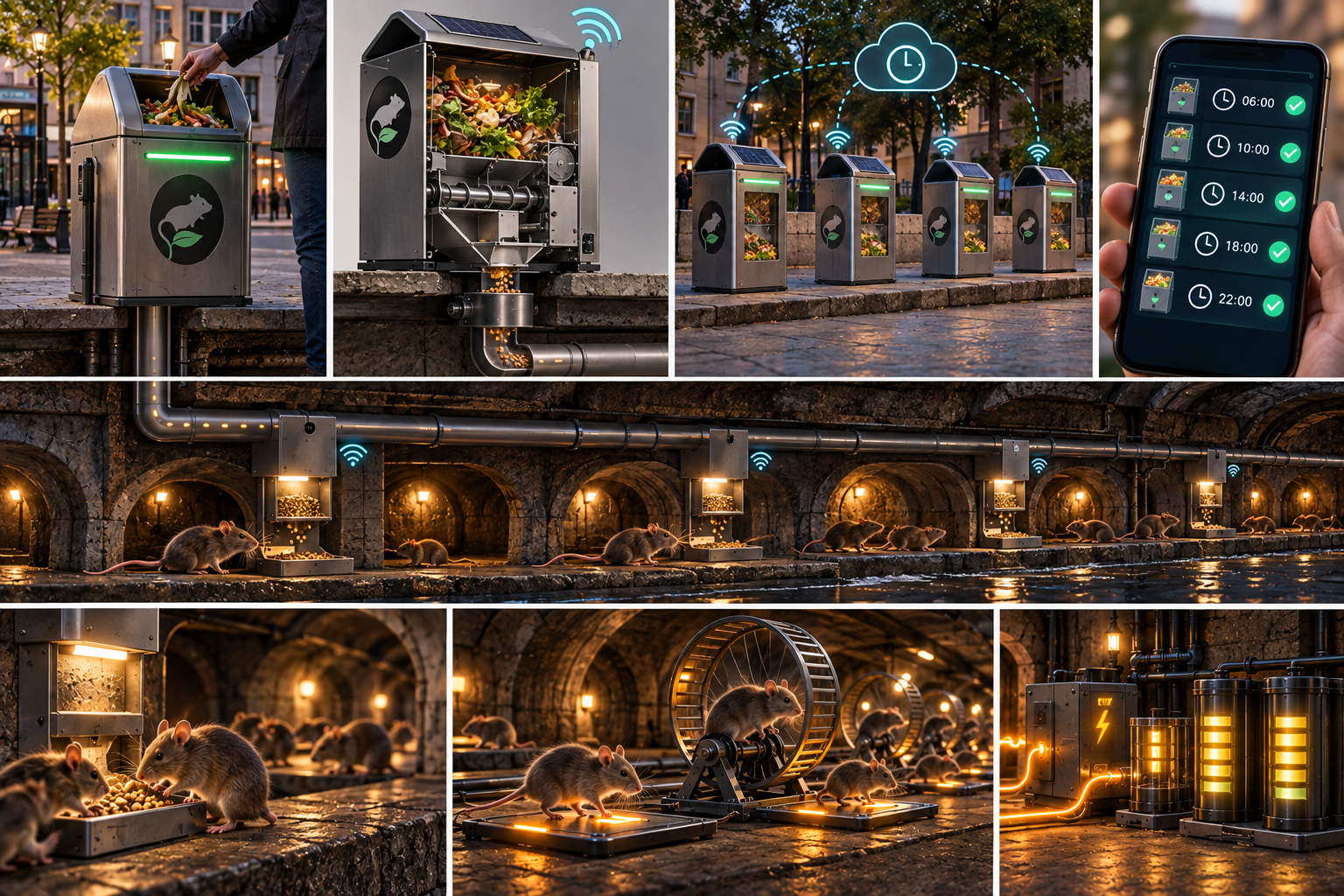
Next distribution 06:00 · Paris
Virtual laboratory
Adjust the activity level and watch the simulated output, speed and charge change in real time.
Illustrative data generated for this technology demonstration.
Measurable impact
BLAMPS does not claim to power a city. It makes energy efficiency, mechanical conversion and distributed networks tangible.
Explore the European scenariosEuropean infrastructure
Stations share their schedules, resource levels and energy data to alternate food distribution across Europe.
 5connected countries
A European laboratory
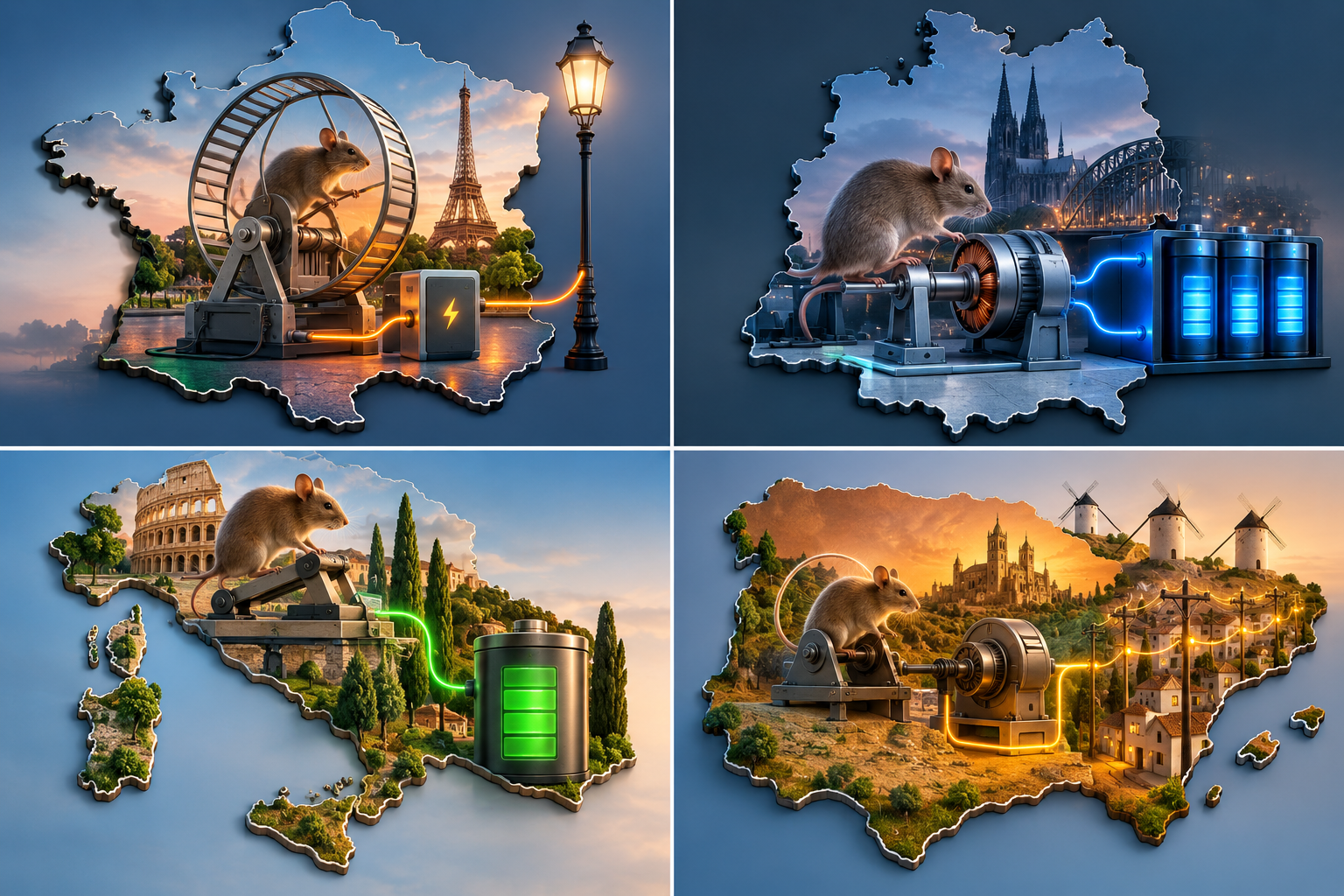
Each scenario adapts micro-energy collection to its environment and educational purpose.
Local collection of organic inputs and distribution through Parisian tunnels.
Bio-collectionPrecise station synchronisation and movement tracking between zones.
Synchronised feedingRecovery of movement and modular low-voltage storage.
Modular batteriesAlternating feeding corridors that encourage natural mobility.
Mobility corridorsDistributed bio-collectors connected to a miniature energy microgrid.
Distributed microgrid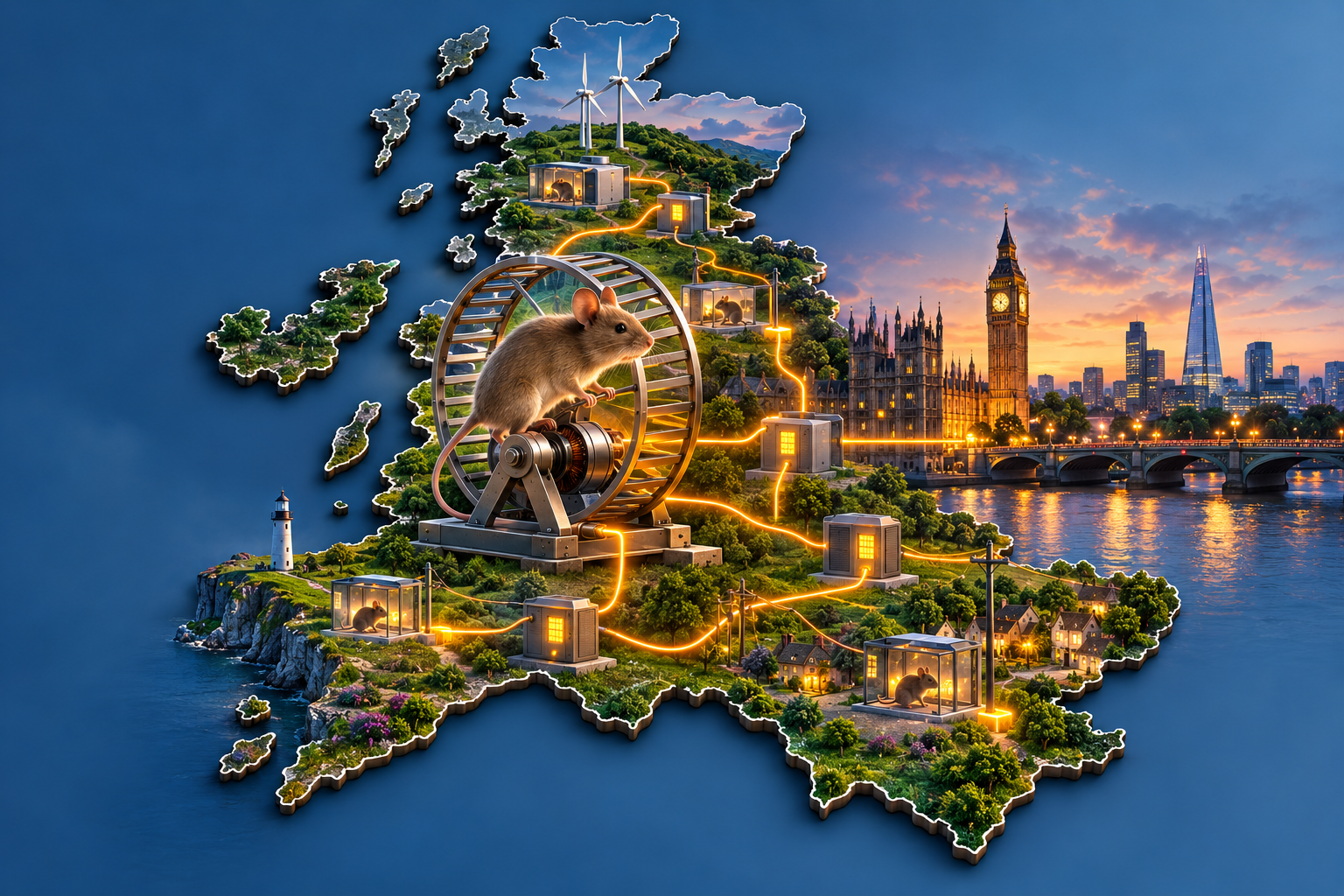
FAQ
The concept, its limitations and its responsible approach.
A small-scale future
Are you a laboratory, school, museum or industrial partner? Let’s discuss a demonstration tailored to you.